
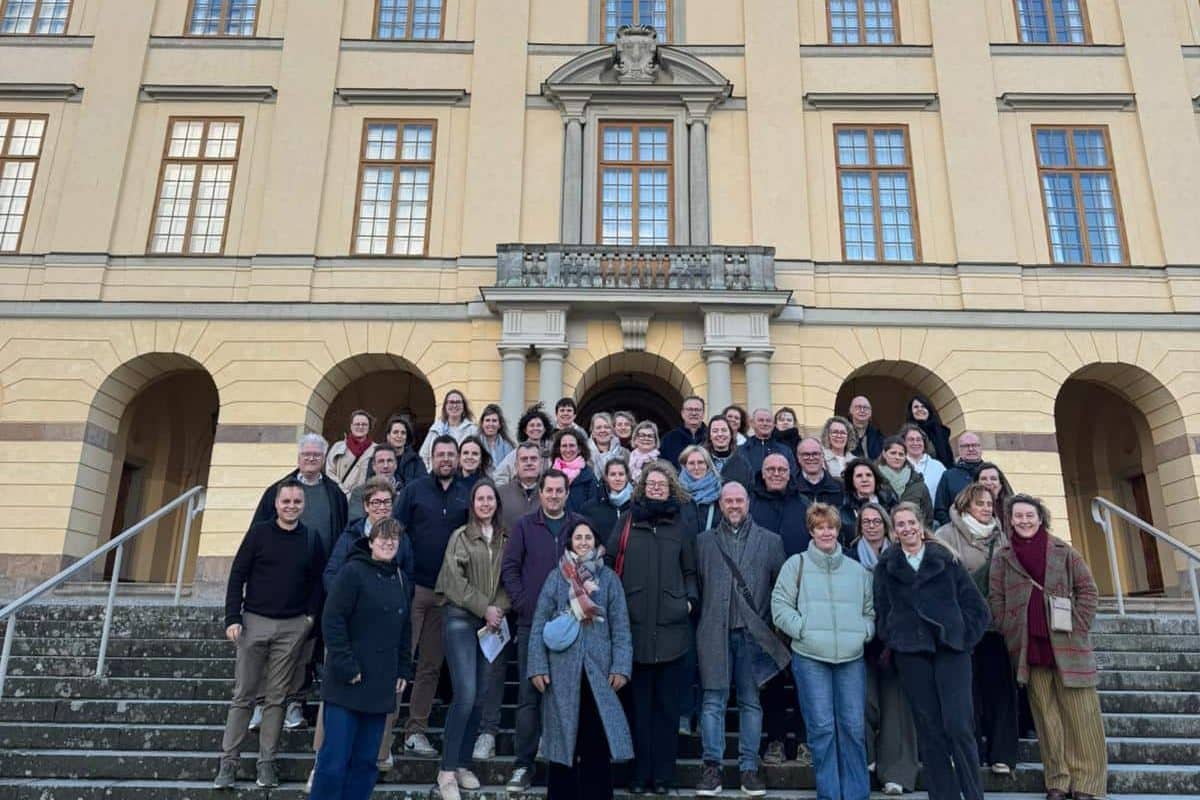
During a study trip to Stockholm, Flemish care directors and managers went to see how Sweden organizes elder care Stockholm. What stands out when you take a closer look at a different care system? And what insights do we take back to Flanders?
The initiative for this study tour came from the working group TOI (Home Care Support Initiatives). In4Care organized the study tour together with Zorg Educatie Centrum vzw.
Study trips like this are not a quest for who does it better. They are a way to see other choices.
How do they organize elder care Stockholm? What principles guide their system? And what does that mean for how we continue to shape care in Flanders?
Progress in care rarely arises alone. It grows when people in the field look together, ask questions and share insights.
1. Care as part of everyday life
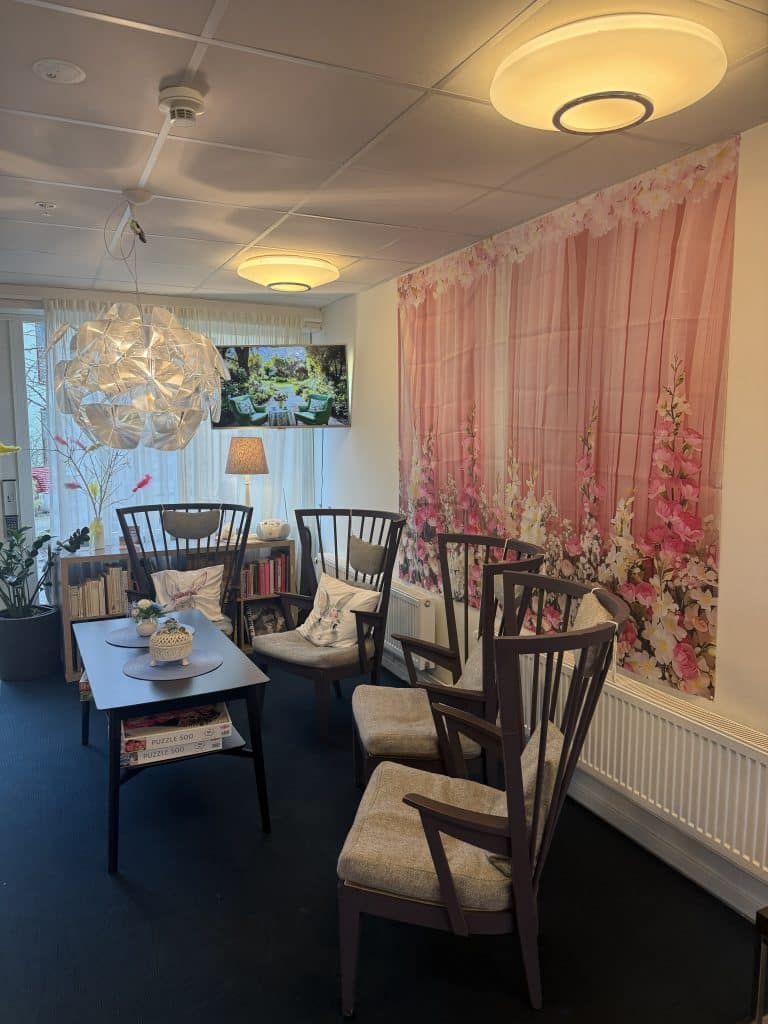
Our first stop was Stiftelsen Stora Sköndal, a campus where housing, healthcare, education and research come together.
What immediately stands out there is how strongly care is embedded in everyday life. Generations live together. Meeting, living and support are intertwined.
The organization of elder care in Sweden is structured as follows:
The national government sets the framework.
Regions organize health care.
Municipalities take charge of elderly care.
This local responsibility makes a difference. Decisions are made close to the citizen and care becomes visible in the living environment.
Anyone over 65 can apply for care. Assessment is based on needs and leads to an individual care plan. From home care and day activities to residential care and meeting places, the services are broad and connect to people’s daily lives.
When you look at this from a Flemish perspective, what is particularly striking is the coherence. We too are increasingly convinced that care should be broader than care alone. But often we still work in separate systems.
Here we see a different logic: clear choices, clear responsibilities and organization close to the citizen.
2. Organizing care around people
On the second day, a fundamental question emerged:
Do we organize care around the system, or around the caregiver?
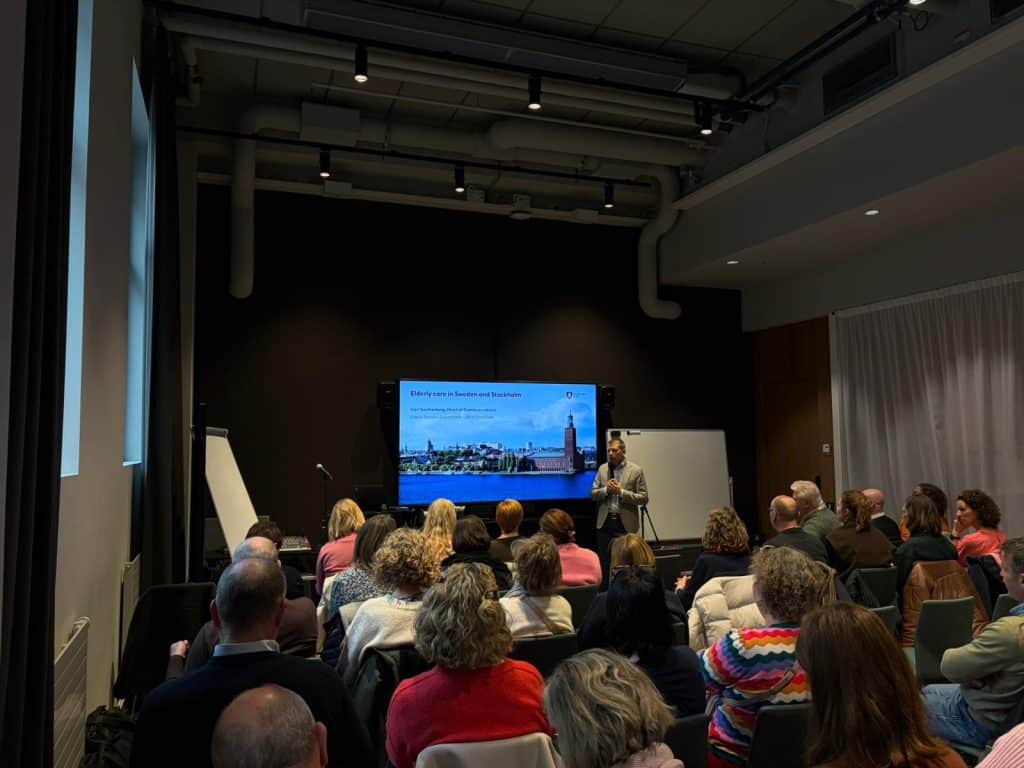
In the morning, we visited the ARC – Aging Research Center of the Karolinska Institutet. There, research is being done on elder care, cognitive decline and how people navigate through the care system.
What is striking here is how much data is available and the strong commitment to evidence-based research. This combination of extensive data sources and academic research makes it possible to continually evaluate and adjust health care policy and practice.
In the afternoon, we saw how that vision translates into practice at Stiftelsen Silviahemmet, an international reference center for dementia care.
A few principles stand out.
- The caregiver sets the rhythm. Activities and visits are tailored to the residents, not the other way around.
- Employees receive specialized expertise. The so-called Silvia Sisters are healthcare professionals who undergo specific training and certification in dementia care.
- Reflection is a structural part of the work. Through peer and group reflection, experiences are shared and mistakes are discussed.
- Even the physical environment is co-designed. For example, there is collaboration with IKEA around dementia-friendly design of rooms.
What becomes clear here: person-centered care is not just in policies or structures. It is in the daily choices of how care is organized.
3. The environment as silent caregiver
During the last day, it was not only about care, but also about the spaces in which care happens.
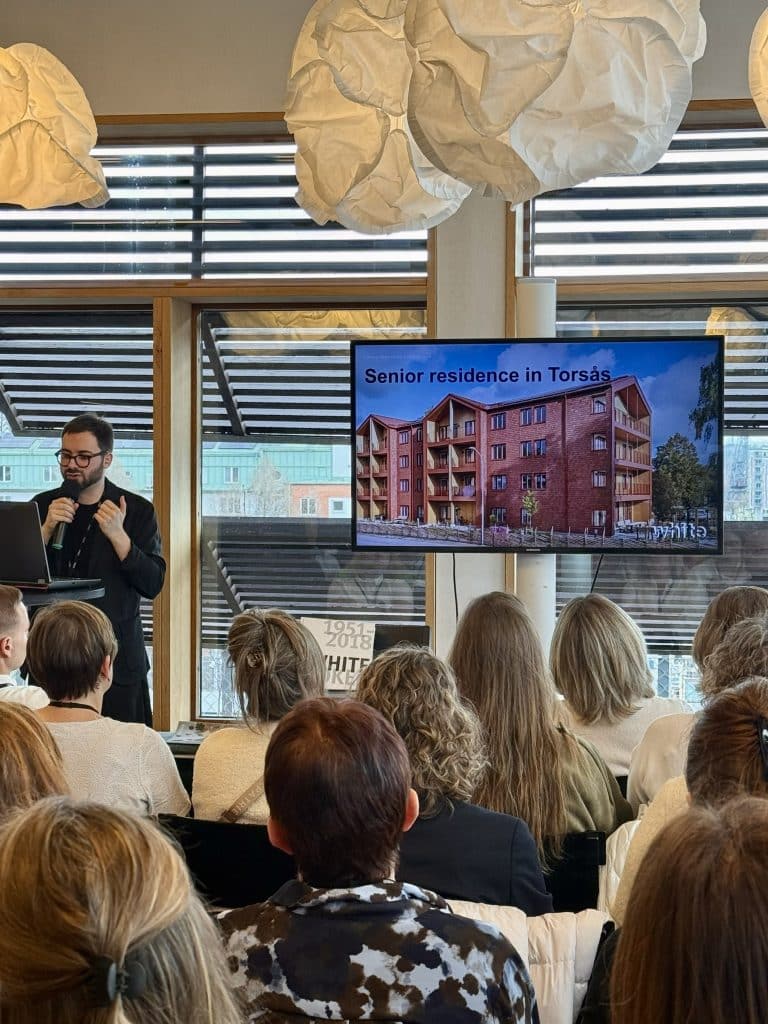
At White Arkitekter we saw how architecture is being used intentionally to support care.
No spectacular interventions, but thoughtful choices:
- low windows so that even patients in bed have a view of the outdoors and nature
- terraces of rooms where family is welcome
- social staircases and shared spaces that encourage meeting
- warm materials such as wood that combine homeliness with hygienic requirements
- use of color that makes hospitals less clinical
The message was clear: The environment in which care takes place influences recovery, encounter and well-being.
4. Technology that supports
Digital solutions were also discussed.
At Curoflow we saw how digital triage and video consultations better connect patients, families and care teams and reduce administrative noise. What is interesting about this organization is that their staff are healthcare professionals and were themselves in the field.
With Dosell we were introduced to a smart medication dispenser for home use. The device helps increase adherence, reduce medication errors and can reduce the number of home visits.
During the study tour, we were also introduced to Orikio, which is developing technology that can use artificial intelligence to detect emergency situations in residents, think assistance requests (falls, choking, etc.) so that care teams can respond more quickly and residents are supported more safely.
No big futuristic systems, but targeted solutions that support the work of healthcare professionals.
5. The Swedish logic: Fika
Something else stood out during the trip. The word Fika came up almost every day.
Fika is the Swedish ritual where people deliberately take time for coffee, something sweet and, most importantly, for each other.
It seems like a small cultural detail. But perhaps there’s a piece of their culture of care in there as well: making space for meeting, for conversation and for connection.
And perhaps that is the most important lesson of this study tour.
Because ultimately, progress in healthcare is not just about systems, technology or buildings.
She starts with people looking together, asking questions and being willing to think differently.
Sometimes that just requires you to step out of your own system.
What also stands out when you compare? The strength of the industry in Flanders 👏
At the same time, such a study tour also reveals something else. How much is already happening in Flanders.
With often more limited resources and more complex structures, healthcare organizations set up strong initiatives every day. For us, innovations often emerge from practice: from healthcare providers, organizations and collaborations seeking solutions to concrete challenges.
The visits in Stockholm show inspiring examples. But they also confirm something else: that there is an enormous amount of expertise, commitment and creativity in care in Flanders.
So perhaps the biggest challenge lies not only in finding new ideas, but also in creating space so that strong initiatives can grow and reinforce each other.
This study tour was co-sponsored by Orikio.

Orikio is developing technology that can use artificial intelligence to detect resident emergencies – such as falls or calls for help – so that care teams can intervene more quickly and residents are supported more safely.
During the trip to Stockholm, they were on hand to listen, draw inspiration and take away insights on how technology and healthcare practice can reinforce each other.
Possibly relevant articles
No related articles were found.